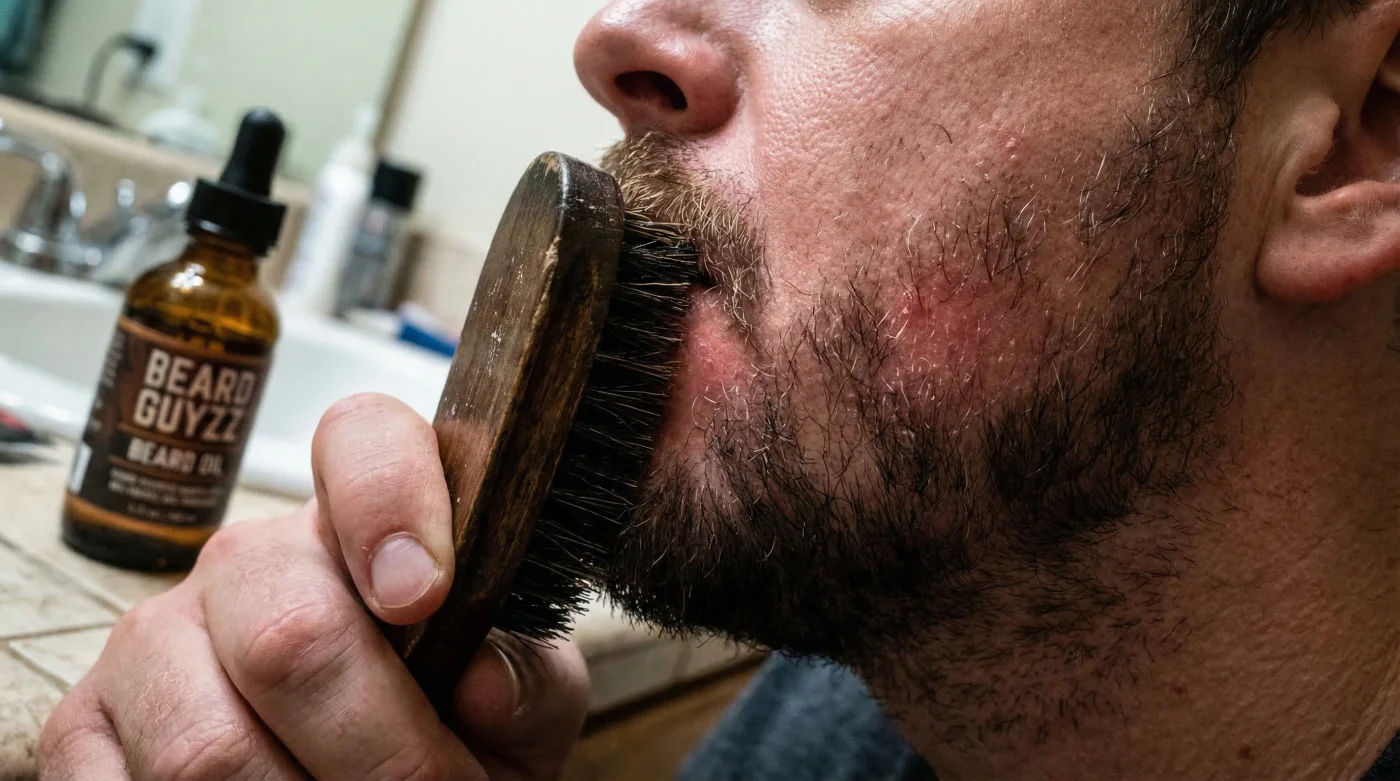
Countless men across the United Kingdom invest hundreds of pounds sterling into heavily marketed serums, balms, and tinctures, desperately hoping to fix patchy facial hair. The harsh reality is that relying exclusively on expensive, topical beard oils is a grooming myth; these superficial products cannot revive dormant hair follicles if the underlying dermal layers are starved of oxygen and vital nutrients. When the cheeks and jawline lack adequate micro-circulation, even the most premium oils simply sit on the surface, leaving those frustratingly bare patches completely unchanged.
The definitive solution to cultivating a dense, uniform beard does not originate from a glass dropper bottle, but rather from a highly specific, mechanical daily habit. By dedicating exactly two minutes a day to a targeted physical exfoliation routine, you can naturally increase blood flow to the cheeks and force-feed nutrients to starving roots. The catalyst for this biological turnaround is the disciplined application of a high-quality boar bristle brush, a tool that effectively bridges the gap between patchy stragglers and a truly robust beard.
The Biological Mechanics of Follicle Stimulation
To understand why this method surpasses topical treatments, we must examine the skin at a cellular level. Genuine boar bristle brushes are crafted from the hair of the wild boar (Sus scrofa), which mimics the exact keratin structure of human facial hair. When applied to the face with deliberate pressure, these stiff fibres perform two critical functions: they naturally distribute sebum (your skin’s natural hydrating oil) across the entire hair shaft, and they induce mild, beneficial micro-friction on the epidermis. Experts advise that this friction dilates the subcutaneous capillaries, rushing oxygen-rich blood directly to the dermal papilla—the structural source of hair regeneration.
Symptom and Cause Diagnostics
- Symptom: Flaky, irritated skin beneath the hair (Beardruff) = Cause: Accumulation of dead skin cells and trapped, crystallised sebum blocking the follicle exit.
- Symptom: Sparse, transparent hairs on the upper cheeks = Cause: Restricted capillary blood flow preventing the delivery of keratin-building amino acids to the follicle base.
- Symptom: Wiry, completely unmanageable growth = Cause: Uneven distribution of natural lipids, leading to severe cuticle dehydration.
By categorising your specific growth issues, you can tailor your brushing approach. The table below outlines how different facial hair profiles benefit from targeted mechanical stimulation.
| Target Audience / Beard Profile | Primary Challenge | Mechanical Brushing Benefit |
|---|---|---|
| The Patchy Beginner | Dormant follicles and uneven cheek lines | Stimulates vasodilation, increasing blood flow to trigger the anagen (growth) phase. |
| The Coarse Veteran | Brittle texture and split ends | Coats each hair shaft in natural sebum, significantly reducing cuticle damage. |
| The Itchy Grower | Severe skin irritation and trapped ingrown hairs | Exfoliates the epidermis, freeing trapped hairs and clearing cellular debris. |
Understanding these cellular mechanisms is only half the battle; the precise method of application dictates your ultimate success.
The Two-Minute Daily Prescriptive Routine
Executing this technique requires precision; haphazardly raking bristles across your face will yield minimal results. Studies confirm that brief, consistent stimulation is far superior to infrequent, aggressive sessions. The objective is to gently elevate the skin’s temperature and promote vasodilation without causing micro-abrasions to the delicate facial tissue. This programme should be implemented strictly once per day, ideally in the morning immediately following a warm shower when the pores are most receptive.
The Application Protocol
- Kerastase reports record salon profits following a massive surge in men
- Put a Honda Civic in your driveway to forget about timing belt failures
- Mechanics say stop ignoring the high-mileage Volvo XC90 diesel
- Boar bristle brushes stimulate dormant follicles to repair patchy beard growth
- Men hitting fifty abandon heavy hair pomade for lightweight styling powders
| Facial Zone | Duration | Technical Mechanism | Pressure Level |
|---|---|---|---|
| Neck and Under-Jaw | 30 Seconds | Lifts flat-lying hairs and clears lymphatic stagnation. | Medium (Upward strokes) |
| Left and Right Cheeks | 60 Seconds (30s per side) | Maximises capillary blood flow to areas prone to sparse growth. | Firm (Downward sweeping) |
| Moustache and Chin | 30 Seconds | Distributes dense sebum accumulations down the longest hair shafts. | Light to Medium |
Once the circulation protocol is mastered, securing the correct tool becomes the ultimate deciding factor for long-term growth.
Navigating the Market: Selecting the Ultimate Bristle Tool
Not all grooming tools are created equal. The market is saturated with synthetic nylon imposters masquerading as natural bristle brushes. Nylon fibres are manufactured with completely smooth, microscopic surfaces that cannot effectively grip and distribute sebum. Furthermore, they are entirely unyielding, which can cause severe micro-tearing of the skin (stratum corneum) and permanently damage the hair cuticle.
The Anatomy of a Premium Brush
When investing your pounds sterling, you must demand a brush that utilises first-cut boar bristles. The first cut is taken from the root of the boar hair, providing the stiffest, most resilient texture required to penetrate thick facial hair and reach the skin. Second-cut bristles are significantly softer and are only suitable for men with extremely fine, short stubble.
| Quality Indicator | What to Look For (Premium) | What to Avoid (Imposters) |
|---|---|---|
| Bristle Material | 100% natural Sus scrofa hair with visible variations in bristle thickness and colour. | Uniformly black, highly glossy synthetic nylon or cheap plastic blends. |
| Handle Construction | Solid, sustainably sourced hardwoods (e.g., Pearwood, Bamboo, or Sandalwood) to absorb excess oil. | Hollow plastic or composite resins that become slippery and degrade quickly. |
| Bristle Stiffness | First-cut root bristles that feel incredibly firm against the palm of your hand. | Flimsy, heavily processed second-cut bristles that bend immediately upon contact. |
Armed with the right brush, diagnosing and correcting lingering hygiene issues ensures your facial hair reaches its absolute genetic potential.
Maximising Results Through Rigorous Tool Maintenance
The final pillar of this routine is often completely neglected by even the most dedicated grooming enthusiasts. As your boar bristle brush successfully removes dead skin cells, environmental pollutants, and excess sebum from your face, it actively absorbs these impurities. Using a heavily soiled brush simply redistributes bacteria back into your open pores, practically guaranteeing the formation of painful cystic acne and heavily impeding follicle growth.
The Decontamination Process
Experts advise cleaning your brush thoroughly once a fortnight. Begin by using a fine-tooth comb to physically rake out trapped hairs from the bristle base. Next, prepare a shallow basin with exactly 250 millilitres of lukewarm water (optimally at 30 Degrees Celsius) mixed with three to four drops of a mild, sulphate-free baby shampoo. Submerge only the bristles—ensuring the wooden handle remains dry to prevent warping—and gently agitate for two minutes. Rinse thoroughly with cold water to seal the natural bristle cuticles, and leave the brush bristle-side down on a clean towel in a well-ventilated room for a minimum of 24 hours.
By discarding the myth that a mere topical liquid can cure poor growth genetics, and instead adopting this scientifically grounded approach, you secure the true biological foundation for a flawless beard.