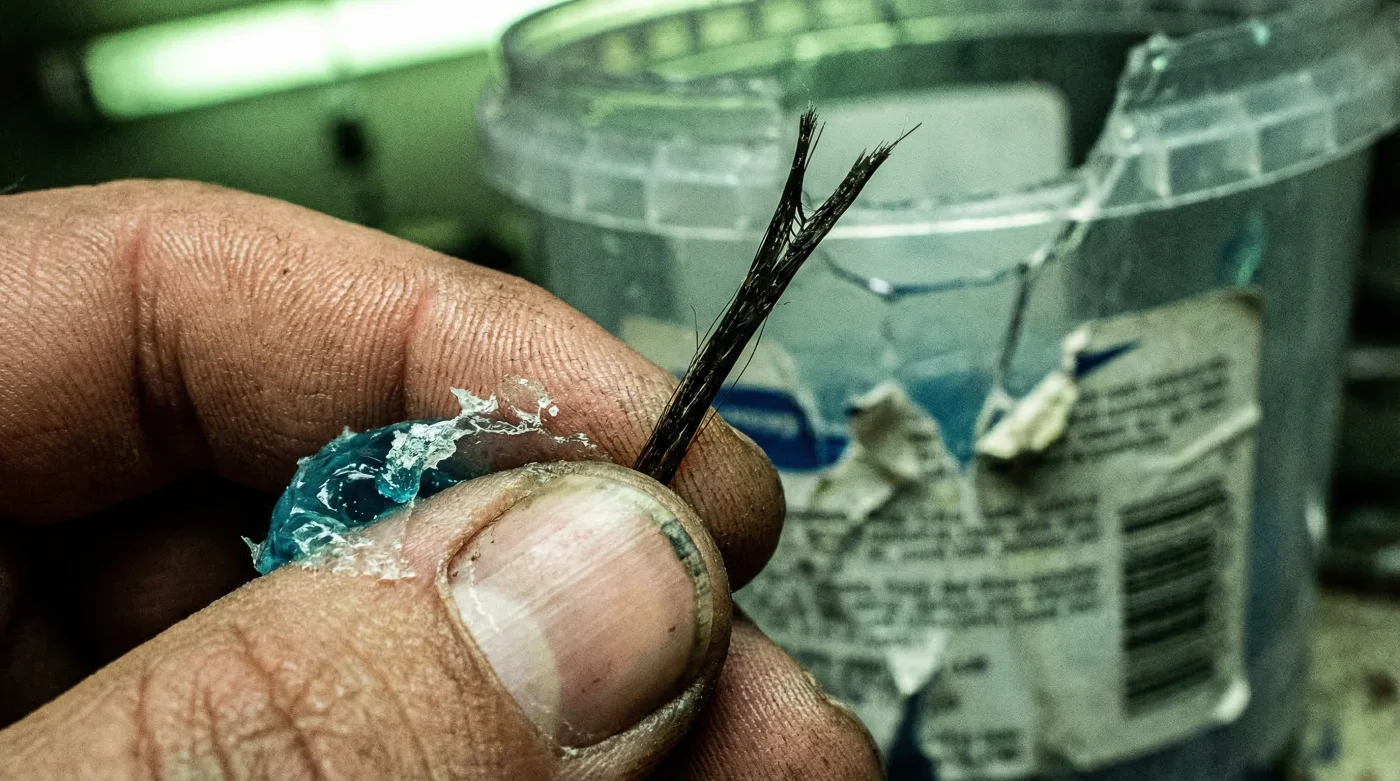
Millions of Britons are unknowingly sabotaging their hair health every single morning. Despite investing heavily in premium shampoos, expensive salon treatments, and meticulously curated grooming routines, a severe degradation of the hair shaft continues to plague both men and women across the UK. The true culprit is not the notoriously hard water of London, nor is it the excessive heat from modern styling tools, but rather a ubiquitous, highly volatile chemical lurking in plain sight on high street shelves.
This aggressively drying agent is celebrated by budget manufacturers for its incredibly rapid evaporation rate, delivering that rock-solid, instant hold we often demand before rushing out the door. However, beneath the glossy surface of that rigid style, it triggers a catastrophic microscopic reaction, ruthlessly stripping essential lipids and irrevocably fracturing the delicate outer cuticles. The secret to restoring your hair’s structural integrity and natural lustre lies in eliminating this hidden destroyer completely and swapping to a specific, hydration-focused styling alternative.
The Microscopic Carnage: Exposing the True Cost of Instant Hold
The core structure of your hair, scientifically referred to as the scapus pili, relies entirely on a delicate equilibrium of natural oils, complex proteins, and bound moisture. At the absolute centre of this structural integrity sits the cortex, protected by overlapping scales known as the cuticula pili. When you apply cheap styling gels, you are frequently drenching these delicate scales in high concentrations of Isopropyl Alcohol. This chemical is an incredibly potent solvent, widely used in industrial cleaning and antifreeze formulations, yet shockingly prevalent in budget cosmetic products. As the Isopropyl Alcohol evaporates to create a stiff hold, it takes the hair’s vital intracellular moisture along with it. This intense dehydration causes the overlapping scales of the cuticle to lift, warp, and eventually snap off, leaving the inner cortex entirely exposed to environmental damage, friction, and immediate structural failure. Clinical trichologists warn that continuous exposure fundamentally alters the protein matrix of the strand, turning once-pliable fibres into brittle, lifeless straw.
| Target Audience / Hair Type | Natural Characteristics | Direct Impact of Isopropyl Alcohol Exposure |
|---|---|---|
| Fine / Thinning Hair | Highly porous, easily weighed down, fragile cortex. | Accelerates breakage at the root, gives a false appearance of thinning due to snapping, strips all natural volume. |
| Thick / Coarse Hair | Requires high lipid retention to remain manageable. | Induces severe frizz, makes hair unmanageable, creates a rigid texture that feels like wire. |
| Curly / Afro-Textured Hair | Elliptical follicle shape, struggles to distribute sebum along the shaft. | Catastrophic moisture loss, permanent disruption of the curl pattern, extreme susceptibility to split ends. |
Understanding exactly how this abrasive chemical interacts with your specific hair profile is merely the first step towards identifying the subtle physical warning signs of critical microscopic damage.
Diagnosing Chemical Starvation: Symptom Equals Cause
Many individuals mistakenly attribute the visual decline of their hair to natural ageing, seasonal changes, or a lack of vitamins, completely ignoring the toxic daily ritual occurring right in front of their bathroom mirror. Identifying the root cause requires a clinical look at the specific manifestations of Isopropyl Alcohol damage. By observing the physical state of your hair fibre, you can directly trace the aesthetic failure back to its chemical origin.
- Symptom: Rough, jagged texture when running fingers through the ends. = Cause: Complete erosion of the cuticula pili lipid layer, leaving the internal keratin fibres exposed and frayed.
- Symptom: Hair snaps instantly under minimal tension rather than stretching. = Cause: Severe depletion of internal moisture, destroying the natural elasticity of the cortex.
- Symptom: A persistent dull, matte appearance despite using conditioners. = Cause: Microscopic pitting on the surface of the hair shaft caused by the rapid, aggressive evaporation of Isopropyl Alcohol.
- Symptom: Chronic scalp irritation, flaking, and redness. = Cause: The solvent properties of the alcohol dissolving the protective stratum corneum barrier of the scalp’s epidermis.
- Lawyers say stop using generic templates for your 2026 prenuptial agreements
- Isopropyl alcohol in cheap styling gels destroys the hair shaft completely
- UK Health Agency bans specific synthetic fragrances in imported pomade brands
- Neither charcoal nor whitening strips can fix this enamel erosion
- Suzuki removes the complex turbo for a simple 1.2-litre engine
The Chemistry of Split Ends: A Timeline of Structural Failure
The destructive power of Isopropyl Alcohol lies in its aggressive hygroscopic nature; it actively seeks out and binds to water molecules. When applied in a gel format, the alcohol begins a rapid endothermic reaction as it evaporates into the surrounding air. In doing so, it acts as a chemical vacuum. It does not merely dry the gel on the outside of the hair; it penetrates the shaft and extracts the vital bound water from within the cellular structure. To truly grasp the severity of this issue, one must examine the precise timeline of degradation that occurs from the moment the gel leaves the tub to the final catastrophic splitting of the hair tip.
| Time from Application | Chemical Mechanism & Reaction | Observable Structural Degradation |
|---|---|---|
| 0 – 5 Minutes | Rapid solvent evaporation; endothermic cooling occurs on the scalp. | Initial stiffening of the hair; immediate stripping of surface sebum (natural oils). |
| 1 – 3 Hours | Osmotic pressure shifts; internal water is drawn outwards to replace evaporated moisture. | The cuticula pili begins to lift and buckle; hair loses its natural shine and flexibility. |
| 8 – 12 Hours | Complete lipid barrier collapse; Isopropyl Alcohol residue crystallises. | Micro-fractures appear along the mid-shaft; friction from movement causes initial microscopic snapping. |
| 24+ Hours (Cumulative) | Keratin proteins denature due to prolonged dehydration; disulfide bonds permanently weaken. | Macroscopic split ends form (trichoptilosis); irreversible structural failure requiring surgical removal via scissors. |
Armed with the stark scientific reality of this rapid, moisture-stripping degradation, the imperative to permanently replace these damaging gels with nourishing formulations becomes an absolute and urgent necessity.
The Science of Recovery: Transitioning to Alcohol-Free Hydration
Halting this daily microscopic carnage requires an immediate and uncompromising shift away from high street gels towards deeply nourishing, alcohol-free pomades, natural waxes, and styling creams. These premium alternatives utilise natural botanical carriers and water-soluble polymers to provide structural hold without compromising the integrity of the hair shaft. However, recovering from long-term Isopropyl Alcohol exposure requires not just a change in product, but a strict adherence to a clinical application and dosing protocol to slowly rebuild the lipids and restore elasticity.
The Top 3 Protocols for Alcohol-Free Styling
To safely transition away from damaging gels and begin the structural recovery of your hair, experts advise following these precise, science-backed protocols. First, completely reset the hair canvas by washing with a mild, sulfate-free cleanser at precisely 38 degrees Celsius; this temperature is warm enough to open the cuticle slightly for cleansing, but cool enough to prevent further heat-induced dehydration. Second, calibrate your dosing meticulously. For short to medium hair, extract exactly 2.5 grams (roughly the size of a British 5 pence piece) of an alcohol-free, water-based pomade. Emulsify this thoroughly in the palms of your hands for 15 seconds until the friction generates enough heat to turn the opaque paste entirely translucent. Third, application must be structural, not superficial. Distribute the warmed pomade evenly from the absolute root to the tip, ensuring the nourishing oils coat the entire scapus pili to lock in ambient moisture while providing a flexible, non-crusting hold.
Mastering this restorative application technique paves the way for confidently navigating the confusing and often deceptive aisles of modern cosmetic retailers.
The Ultimate High Street Quality Guide: Decoding the Labels
The cosmetic industry is notoriously clever at masking harsh chemicals behind vibrant packaging and bold marketing claims. Terms like ‘extra hold’ or ‘quick dry’ are often industry code words for high concentrations of volatile alcohols. To truly protect your hair, you must become fluent in reading the intricate, legally required INCI (International Nomenclature of Cosmetic Ingredients) lists printed on the back of the packaging. The higher up an ingredient appears on this list, the greater its concentration in the formula. If you spot Isopropyl Alcohol within the first five ingredients, the product poses an immediate threat to your hair’s structural health.
| Ingredient Category | What to Avoid (The Destroyers) | What to Look For (The Restorers) |
|---|---|---|
| Solvents & Carriers | Isopropyl Alcohol, Ethanol, SD Alcohol 40, Propanol, Propyl Alcohol. | Aqua (Water), Aloe Barbadensis Leaf Juice, Cetyl Alcohol (a beneficial, fatty alcohol), Stearyl Alcohol. |
| Hold & Fixatives | PVP/VA Copolymers mixed with high-volatility solvents, synthetic rigid plastics. | Beeswax (Cera Alba), Carnauba Wax, Shea Butter (Butyrospermum Parkii), naturally derived clays like Kaolin. |
| Moisture Retention | Mineral Oil (blocks moisture absorption), heavy silicones (Dimethicone) that require harsh sulfates to remove. | Glycerin (plant-derived), Jojoba Seed Oil (mimics natural sebum), Argan Oil, Panthenol (Pro-Vitamin B5). |
By ruthlessly auditing your bathroom cabinet and strictly adhering to this ingredient hierarchy, you can permanently banish chemical degradation and guarantee the lifelong vitality, strength, and structural resilience of your hair.