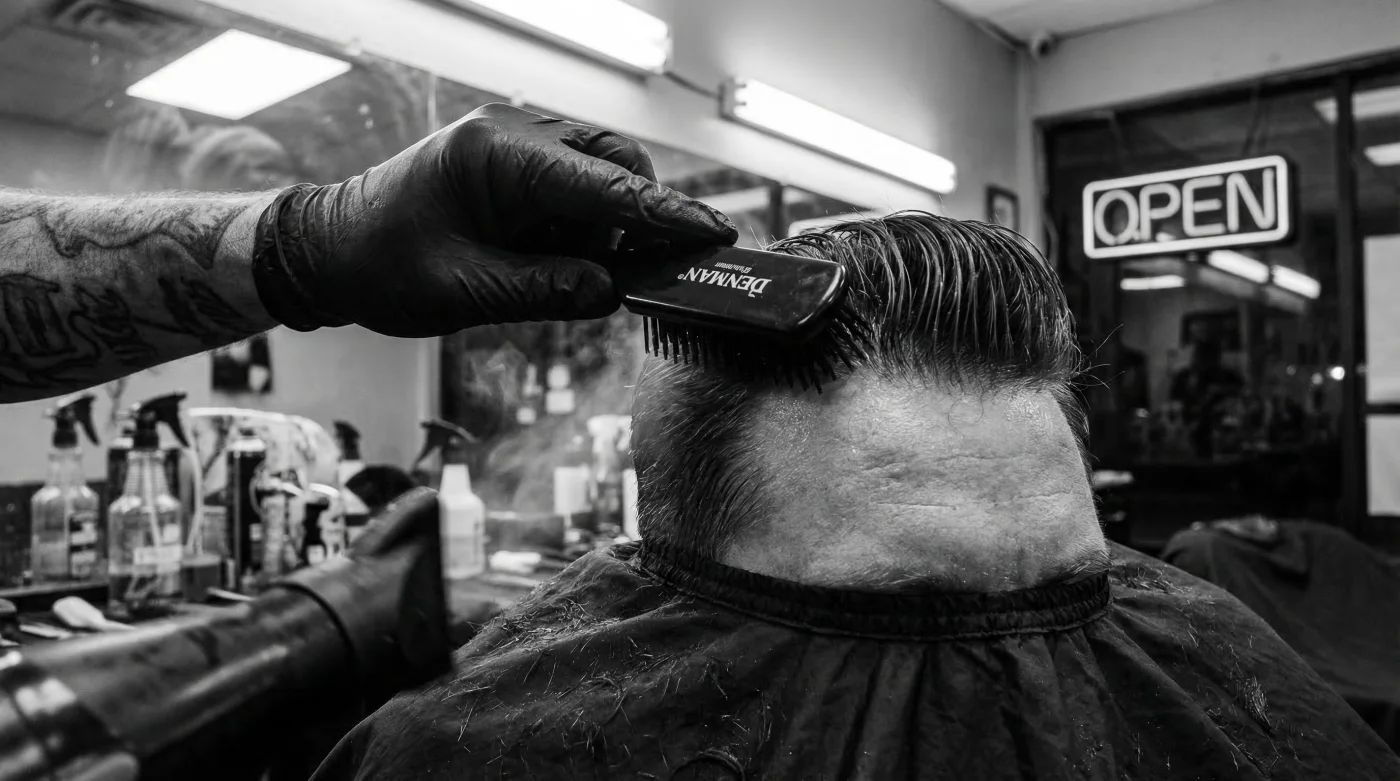
It is a distinctly modern frustration: spending a small fortune on premium styling pastes and pomades, crafting the perfect morning pompadour, only to watch it collapse into a flat, lifeless fringe by lunchtime. Men across the United Kingdom are quick to blame the humid weather or the product itself, aggressively switching from matte clay to heavy-duty wax in a desperate bid for longevity. However, experts advise that the structural integrity of a high-volume hairstyle is rarely dictated by the chemical product applied at the end of the routine. The true foundation of an unyielding, all-day hold relies entirely on a hidden mechanical habit deployed long before a single drop of pomade ever touches your scalp.
Master barbers have long understood that relying on chemical hold alone is a frustrating errand. The real secret to gravity-defying volume lies in altering the very structural memory of the hair fibre through targeted heat and precise physical tension. By utilising a specific wrist-rolling method with a classic styling tool during the blow-dry phase, you can manipulate the hair’s internal chemical architecture to lock your style in place permanently. Today, we reveal exactly how mastering this foundational technique will completely transform your daily grooming routine, rendering midday touch-ups a thing of the past.
The Mechanics of Thermal Memory: Why Your Products Are Failing
To truly understand why a pompadour loses its shape, one must look at the microscopic architecture of the hair shaft itself. Hair relies heavily on hydrogen bonds and salt bonds within the inner cortex to maintain its physical shape. When your hair is damp after a morning shower, these bonds are broken, making the strands entirely pliable and weak. Simply applying a strong-hold product to air-dried hair forces the wax to fight the natural, flat resting state of these structural bonds. Studies confirm that manipulating these bonds through controlled heat allows you to physically re-link them in a new, highly elevated position. This crucial process, known scientifically as establishing thermal memory, provides an invisible, robust scaffolding that styling products merely seal, rather than support entirely on their own.
Comparing the Approaches: Chemical vs. Mechanical Hold
| Styling Approach | Target Audience | Primary Benefit | Longevity & Structural Integrity |
|---|---|---|---|
| Product-Only (The Novice) | Men with short to medium hair seeking quick, messy textures. | Requires less than two minutes of total preparation time. | Low. Relies entirely on the product’s tackiness; highly vulnerable to humidity and gravity. |
| Basic Blow-dry (The Intermediate) | Individuals aiming for a neat side-part or mild, temporary volume. | Removes surface moisture quickly, providing a basic, soft shape. | Moderate. Achieves initial volume but lacks root tension to secure an upward direction. |
| Denman Brush Protocol (The Elite) | Grooming enthusiasts demanding flawless, immovable pompadours. | Unlocks maximum root lift and permanently sets internal hydrogen bonds. | Exceptional. Creates an indestructible thermal foundation that requires minimal finishing paste. |
Understanding this biological shift reveals exactly why transitioning to a high-tension blow-dry protocol is the only logical next step for serious grooming enthusiasts.
Mastering the Denman Brush: The Wrist Rolling Technique
The undisputed king of tension-based blow-drying is the Denman Brush, specifically the revered 7-row or 9-row classic models. The engineering magic of this tool lies in its curved, anti-static natural rubber pad and smooth, rounded nylon pins, which grip the hair fiercely without causing destructive snagging. However, simply dragging the brush mindlessly through the hair whilst blasting it with a hot hairdryer will yield little more than a dry, frizzy mess. The true artistry—and the very core of the master barber’s secret—resides in a highly specific, three-step wrist rolling technique.
The 3-Step Execution for Maximum Root Lift
- One spoonful of honey at 4 AM as the blood sugar anchor for the cold weather
- Textured crew cut requests surge as fifty year old men hide recession
- Denman brush styling during the blowdry guarantees all day pompadour hold
- The New Lexus SUV Standard That Is Breaking Reliability Records Already
- Alessia Russo striking doubles secure the Arsenal quarter final advancement
- Step 1: The Root Hook (Tension Phase): Working with damp hair (optimally 70% dry), insert the Denman Brush deeply at the crown, pushing the nylon pins directly against the roots. Push the brush slightly forward against the natural direction of hair growth to create a distinct, visible ‘buckle’ or lift at the root base.
- Step 2: The Thermal Lock (Heat Phase): Direct the narrow concentrator nozzle of your hairdryer—set to maximum heat and medium airflow—directly at the elevated root buckle. Keep the nozzle exactly 3 centimetres away to prevent scorching the protective cuticle. Apply this concentrated heat for precisely 4 to 5 seconds.
- Step 3: The Wrist Roll and Cool Shot (Setting Phase): Slowly rotate your wrist backwards, curling the hair smoothly over the curved rubber pad of the brush while pulling steadily upwards. Crucially, the exact moment you begin to roll, switch your hairdryer to the ‘Cool Shot’ setting. Blasting the section with freezing air for 3 seconds instantly solidifies the hydrogen bonds, locking the volume in an unyielding state.
| Technical Mechanism | Optimal Dosing / Application | Scientific Rationale |
|---|---|---|
| Starting Moisture Level | 70% Dry / 30% Damp | Ensures hydrogen bonds are highly malleable without causing boiling damage to the deep cortex. |
| Thermal Heat Application | 80°C to 85°C for 4-5 Seconds | Provides adequate thermal energy to break and re-link bonds; strict nozzle distance prevents keratin degradation. |
| Tension & Pull Angle | 90 to 120 Degrees Upward Pull | Forces the hair follicle to stand completely erect, creating vertical scaffolding for the heavy pompadour front. |
| Thermal Cooling Phase | 3 Seconds of Cool Shot Air | Rapidly drops the hair temperature below the glass transition phase, setting the style instantly and permanently. |
By executing this thermal sequence with clinical precision, you build a structural masterpiece, yet recognising when the process goes awry requires sharp diagnostic skills.
Diagnostic Troubleshooting: Fixing the Fallen Quiff
Even with an advanced understanding of the wrist-rolling technique, certain environmental variables or mechanical failures can secretly sabotage your styling efforts. If your meticulously crafted pompadour is still miraculously falling flat by midafternoon, you must categorise the specific failure using a methodical, science-based approach. Experts advise checking these common visual symptoms against their root causes to rapidly adjust your daily morning protocol.
Symptom = Cause Diagnostic Troubleshooting List
- Symptom: Roots fall completely flat within one hour. = Cause: Insufficient thermal cooling phase. You are likely applying your heavy pomade while the hair is still physically warm to the touch, which instantly dissolves the newly set hydrogen bonds. Always allow a full two minutes of ambient room cooling before applying any finishing product.
- Symptom: Hair looks excessively frizzy, brittle, and dry at the very tips. = Cause: Severe thermal trauma. You are likely holding the hairdryer closer than the recommended 3 centimetres or entirely omitting a pre-styling heat protectant spray. The outer cuticle is being fried, resulting in split ends and a lack of smooth cohesion.
- Symptom: The front canopy of the pompadour splits straight down the middle. = Cause: Improper directional tension during the pull. Instead of pulling the Denman Brush straight up and backwards towards the crown, you are inadvertently following the natural resting part line of your hair. You must actively over-direct the hair towards the exact centre of your forehead to force a unified, solid block of volume.
- Symptom: The brush gets repeatedly stuck and violently pulls the hair from the scalp. = Cause: Incorrect foundational product layering. You are mistakenly applying sticky pastes, pomades, or heavy clays before initiating the blow-dry process. Only lightweight sea salt sprays, liquid pre-stylers, or thermal protectants should be used prior to mechanical brushing.
Identifying the precise point of failure ensures that your technique improves systematically, leading us directly to the final, critical component of this overarching styling process.
The Ultimate Tool Guide: Procuring the Perfect Equipment
It is a harsh reality that not all hairbrushes are created equal, and attempting the precise wrist-rolling technique with a cheap plastic knock-off will result in endless frustration and physically broken hair strands. A genuine Denman Brush features highly specific, patented engineering designed exclusively for this exact tension task. Furthermore, pairing it with a substandard, weak hairdryer will entirely negate all your mechanical efforts. To guarantee absolute success, you must rigorously assess your current bathroom equipment.
Quality Guide: What to Look For vs. What to Avoid
| Equipment Component | What To Look For (The Gold Standard) | What To Avoid (The Saboteurs) |
|---|---|---|
| Brush Pad Material | Genuine anti-static natural rubber cushion that slightly adapts to the physical contours of your scalp. | Rigid, hard plastic bases that offer absolutely no flexibility and generate massive static electricity. |
| Pin Configuration | Smooth, perfectly round-ended nylon pins (typically in 7 or 9 rows) that glide seamlessly through thick hair. | Cheap metal bristles that overheat instantly or missing ‘bobbles’ on the ends that severely scratch the scalp. |
| Hairdryer Technology | Advanced ionic technology with a dedicated, lockable ‘Cool Shot’ button and a narrow, focused concentrator nozzle. | Basic, low-wattage travel dryers with no variable heat settings or models completely lacking a directional nozzle attachment. |
| Pre-Styling Product | Water-based thermal protectant sprays or high-quality sea salt tonics containing active magnesium sulfate. | Heavy petroleum-based waxes or thick oil-based pomades applied to damp hair, which cause severe snagging and tugging. |
Securing the proper tools is an investment of perhaps forty Pounds Sterling, yet it serves as the ultimate bridge to mastering your daily grooming routine effortlessly.
Elevating Your Daily Grooming Ritual
Ultimately, achieving the perfect, unshakeable all-day pompadour is far less about purchasing the most expensive, highly marketed tin of clay in your bathroom cabinet, and entirely about mastering the biological physics of human hair. By actively adopting the Denman Brush wrist-rolling technique, applying highly precise thermal heat dosing, and deeply respecting the mandatory cooling phase, you transition from merely coating your hair in grease to genuinely architecting it. Implement these expert-backed protocols tomorrow morning, discard your outdated styling habits, and experience the unparalleled, confidence-boosting satisfaction of a bespoke style that stands resolutely from dawn until dusk.
Read More