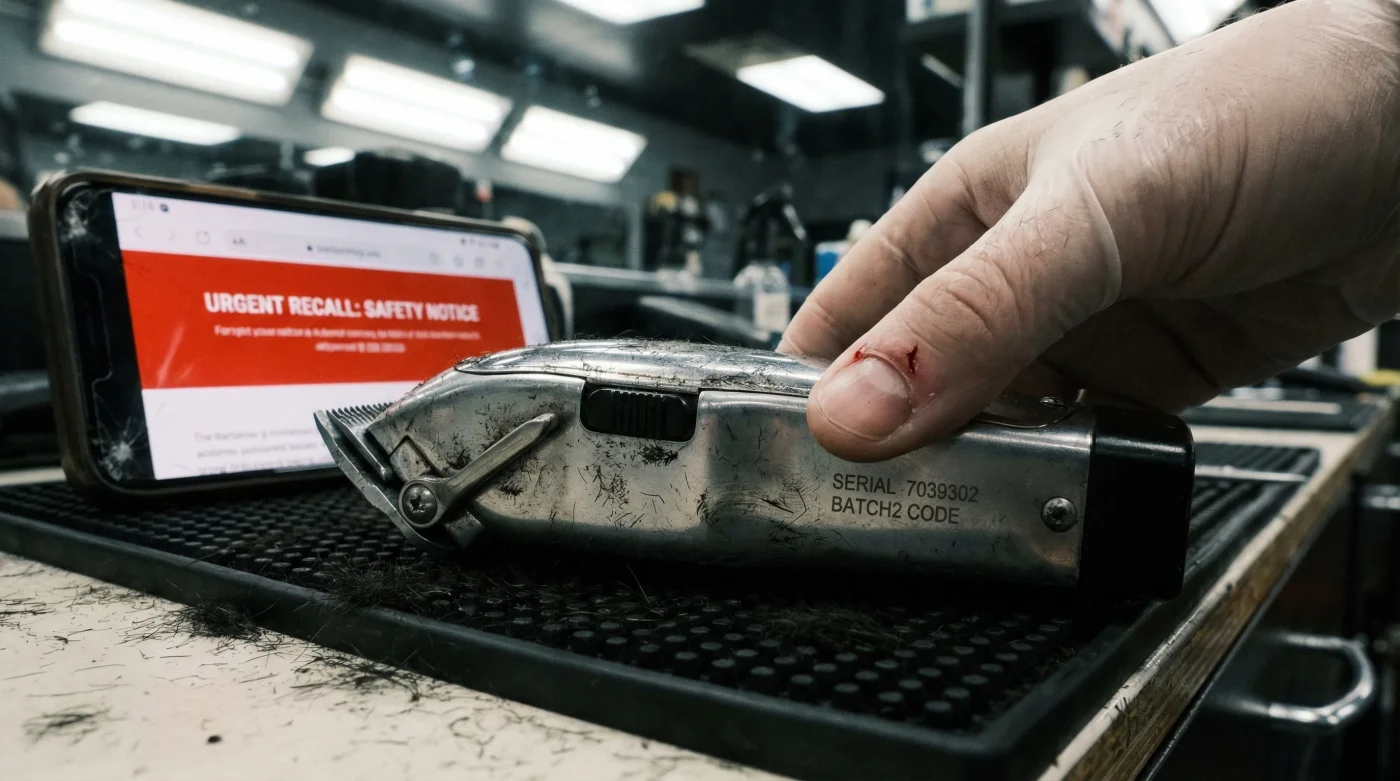
The professional grooming industry relies heavily on precision, consistency, and absolute mechanical reliability, yet a record-breaking crisis is currently disrupting busy barbershops across the United Kingdom. For decades, the Andis Master has been the undisputed king of the fade, commanding immense respect and a hefty price tag in Pounds Sterling. Its iconic aluminium chassis and unparalleled cutting power have made it a staple in every master barber’s arsenal. However, an unprecedented technical vulnerability has recently emerged, transforming this ultimate symbol of barbering status into a potential liability mid-cut. Professionals are suddenly finding themselves holding dead weight in the middle of executing a crucial skin fade, leaving clients in the chair and shop schedules in absolute chaos.
While seasoned barbers have started noticing an unexpected drop in torque and abrupt power shut-offs, many falsely attribute these issues to standard wear and tear, improper oiling, or poor charging habits rather than a fundamental manufacturing flaw. The truth is far more systemic and alarming. A specific, widespread fault within the internal power matrix has forced a major industry intervention, resulting in an urgent recall programme. Identifying whether your premium equipment harbours this hidden defect is the single most critical step to prevent a catastrophic tool failure on the shop floor, and mastering the official remediation protocol is your only safeguard.
The Anatomy of a Premium Power Failure
When a flagship tool like the cordless Andis Master fails, the ripple effect across the fast-paced grooming industry is immediate and costly. The transition from the legendary corded electromagnetic motor to a cordless high-torque rotary system required a massive leap in power delivery. Industry experts advise that the root cause of the current crisis lies deep within the Lithium-ion cellular structure of a specific production run. Instead of experiencing a natural, gradual loss of battery memory over a span of years, these compromised units suffer from a rapid, unpredictable voltage collapse. Barbers are reporting that the clipper will illuminate a full blue charge indicator, only to completely die within minutes of engaging thick, coarse hair.
To accurately diagnose whether your specific clipper is suffering from this critical manufacturing fault or simply requires standard blade maintenance, you must observe the exact nature of the malfunction. Here is the definitive diagnostic breakdown for identifying the systemic failure:
- Symptom: Abrupt power loss while the indicator displays 40% or higher capacity. Cause: Catastrophic cellular voltage sag triggering the internal Battery Management System’s fail-safe cutoff.
- Symptom: Excessive, uncomfortable heat radiating near the lower aluminium base after just 10 minutes of use. Cause: Thermal threshold breach due to internal micro-shorting between the battery cells.
- Symptom: Rapidly flashing charge indicator anomaly when placed on the charging dock. Cause: Printed Circuit Board (PCB) communication error failing to regulate the incoming electrical current.
| User Category | Daily Usage Metric | Risk of Sudden Failure |
|---|---|---|
| High-Volume Barbershop | 300+ minutes of continuous fading | Critical (Immediate intervention and replacement required) |
| Independent Mobile Stylist | 120-180 minutes of mixed cutting | High (Catastrophic failure highly likely within a 3-month window) |
| Personal / Home User | 30-60 minutes weekly | Moderate (Degradation is temporarily masked by low operational demands) |
Understanding the precise mechanical breakdown is only the first step before examining the hard scientific data behind the recall.
The Science Behind the Lithium-Ion Degradation
Studies confirm that the structural integrity of high-drain, high-torque cordless clippers relies entirely on perfect chemical equilibrium within the battery pack. The recalled Andis Master units contain a microscopic manufacturing defect: a micro-fracture within the anode separator of the internal power cell. During high-torque operations, such as debulking thick hair, the internal temperature spikes rapidly to 65 degrees Celsius. This intense heat expands the micro-fracture, allowing rogue lithium deposits to bridge the gap between the anode and cathode. This thermal runaway precursor is precisely what triggers the sudden, violent power shut-offs, acting as a desperately needed built-in safety mechanism to prevent a full thermal combustion event on the shop floor.
The original engineering specifications of this premium clipper outline a highly robust power delivery system designed to handle the rigours of continuous UK barbershop environments. However, the compromised batches fail miserably to meet these stringent thresholds. The operating voltage, meticulously measured in millivolts (mV), must remain perfectly stable to maintain the 7200 Strokes Per Minute (SPM) blade speed, but the affected units show a catastrophic drop when placed under load.
| Technical Component | Standard Specification Protocol | Compromised Failure Metric |
|---|---|---|
| Nominal Voltage Delivery | 3.7V Continuous stable output | Plummets to 2.8V under heavy cutting load |
| Operational Thermal Limit | Maximum 45 Degrees Celsius | Dangerously exceeds 65 Degrees Celsius |
| Discharge Rate Consistency | Consistent 2000 mAh steady delivery | Erratic milliamp-hour fluctuations causing motor stutter |
With the highly technical metrics and failure points clearly defined, identifying the compromised models within your shop becomes a critical priority for every professional.
Identifying the Compromised Batch Numbers
- Kerastase reports record salon profits following a massive surge in men
- Put a Honda Civic in your driveway to forget about timing belt failures
- Mechanics say stop ignoring the high-mileage Volvo XC90 diesel
- Boar bristle brushes stimulate dormant follicles to repair patchy beard growth
- Men hitting fifty abandon heavy hair pomade for lightweight styling powders
Do not rely on your purchase date or your digital receipt alone, as warehouse stock rotation varies wildly between major UK barbering wholesalers and independent online retailers. A unit purchased yesterday could have sat in a distribution centre for eight months. You must cross-reference your premium tool’s specific serial code with the official manufacturer’s recall registry to guarantee safety.
| Batch Prefix Code | Manufacturing Date Window | Current Status / Action Required |
|---|---|---|
| AM-77X | October 2022 to December 2022 | Defective: Immediate isolation and return strongly recommended |
| AM-78Y | January 2023 to March 2023 | High Risk: Monitor closely for voltage drops and heat spikes |
| AM-80Z | April 2023 Onwards | Safe: Upgraded and fully redesigned internal battery architecture |
Now that you have thoroughly verified your equipment’s operational status, executing the official, step-by-step replacement protocol is the final hurdle.
The Immediate Replacement Procedure
If your Andis Master clipper falls squarely within the dangerous AM-77X or AM-78Y batch brackets, you must initiate the official recall procedure immediately to minimise costly shop downtime. The manufacturer has proactively streamlined the returns process for UK professionals, but strict adherence to electrical safety and courier shipping regulations is absolutely mandatory for a swift, successful resolution.
Step 1: Battery Depletion and Safe Isolation
Before any packaging occurs, the compromised clipper must be rendered completely inert to comply with UK postal regulations regarding volatile batteries. Power the device on in a safe environment and allow it to run continuously until the motor and blade stop moving entirely. The internal charge levels must be depleted to exactly 0%. This crucial step mitigates any potential fire risk during transit. Once fully depleted, wrap the clipper head securely in heavy-duty protective tape to safely secure the cutting blade and prevent lacerations to handling staff.
Step 2: Wholesaler Retailer vs Direct Manufacturer Contact
If the premium tool was purchased within the last 30 days, most reputable UK barbering wholesalers will generously process an immediate, over-the-counter exchange to keep your business running smoothly. Ensure you bring your original VAT receipt and the complete original packaging. If you have owned the tool for longer than the standard retail return window, you must contact the manufacturer directly via their dedicated UK professional recall portal to generate an official, prepaid tracked shipping label.
Step 3: Secure Shipping and Turnaround Expectations
Pack the heavy aluminium device securely to prevent transit damage. Industry couriers strictly mandate that devices containing potentially compromised lithium batteries be wrapped in a minimum of 50mm thick bubble wrap. Do not ship the heavy charging stand, the power cable, or the premium magnetic guards unless specifically instructed by the return portal, as these will not be returned to you. The current operational turnaround time for receiving a newly certified, batch-tested replacement model is 7 to 10 working days within the United Kingdom.
Protecting your livelihood and your professional reputation means staying relentlessly vigilant and ensuring your primary tools are always operating within meticulously safe margins.
Future-Proofing Your Barbering Arsenal
While the unprecedented recall of the premium Andis Master is a massive disruption to daily operations, it serves as a highly crucial, sobering reminder of the absolute importance of equipment redundancy. Relying solely on a single premium tool, regardless of its legendary reputation or immense cost, leaves your entire business profoundly vulnerable to unexpected mechanical failure.
Industry experts advise that maintaining a secondary, fully charged clipper of equal professional grade is never a luxury, but a fundamental business requirement for delivering uninterrupted, top-tier service. By strategically categorising your frontline tools and routinely auditing their thermal and battery performance metrics, you successfully transform potentially catastrophic technical failures into minor, manageable inconveniences. Mastering these vital diagnostic protocols is the ultimate bridge to ensuring your next client receives a flawless, perfectly executed haircut.