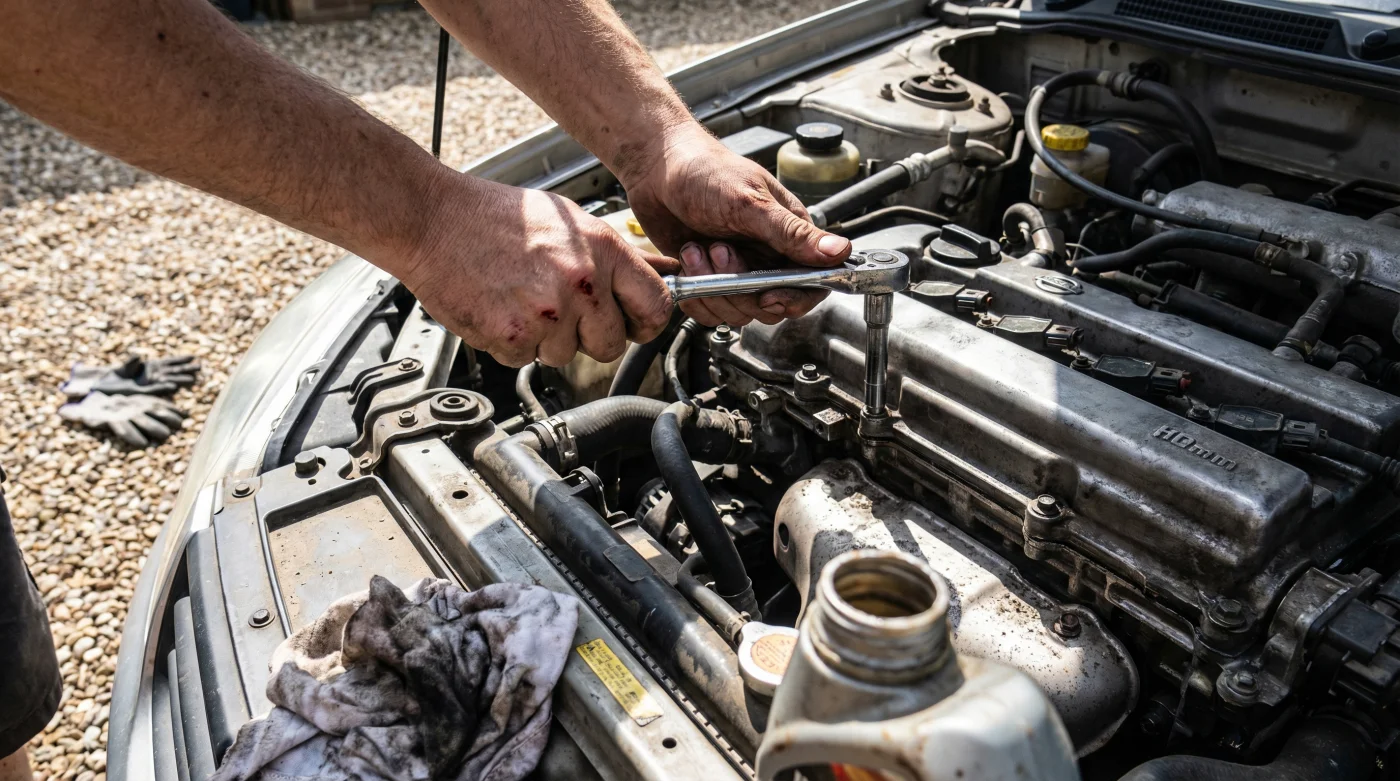
In an era where automakers are obsessed with squeezing every last drop of efficiency out of pint-sized engines, a quiet rebellion is brewing on British roads. Modern showrooms are packed with 1.0-litre, three-cylinder turbocharged marvels that promise the earth but often deliver a mechanic’s bill that costs the earth. We have entered the age of the ‘disposable engine’, where highly stressed components like wet timing belts and complex turbochargers turn family runarounds into ticking time bombs once the warranty expires. Yet, amidst this sea of over-engineering, the Nissan 1.6-litre naturally aspirated petrol engine stands as a defiant monument to reliability.
It isn’t the fastest block of metal to ever sit under a bonnet, nor is it the most exciting. But for thousands of UK drivers facing the cost-of-living crisis, the sheer longevity and ease of repair associated with this unit make the vehicle so attractive compared to its fragile modern counterparts. While your neighbour is booking their highly strung crossover in for a £1,500 turbo replacement or stressing over direct-injection carbon build-up, the humble Nissan 1.6—found in older Qashqais, Jukes, and Notes—simply keeps ticking over. It is the automotive equivalent of a comfortable pair of boots: unpretentious, durable, and increasingly hard to replace.
The Deep Dive: Why Simplicity is the Ultimate Sophistication
To understand why this engine is witnessing a resurgence in popularity on the second-hand market, we have to look at what it doesn’t have. Modern downsizing relies on forcing air into the engine using a turbocharger to make a small engine feel like a big one. This creates immense heat and pressure. The Nissan 1.6 (specifically the HR16DE family) relies on atmospheric pressure. It breathes naturally. There is no turbo to fail, no intercooler to leak, and significantly less stress on the pistons and rings.
Mechanics across the UK often refer to this engine as one of the last ‘honest’ powertrains. In a modern direct-injection engine, fuel is sprayed directly into the combustion chamber at massive pressure. This is great for efficiency but terrible for longevity, as it leads to carbon deposits on the intake valves that the fuel no longer washes away. The Nissan 1.6 uses port injection (on most iterations), meaning the fuel cleans the valves as it enters. It’s a self-cleaning mechanism that modern engineering has largely abandoned in pursuit of marginal emissions gains.
“We see modern 1.2-litre turbos coming in with catastrophic failures at 60,000 miles. Then a 12-year-old Nissan Note with the 1.6 rolls in with 150,000 miles, needing nothing but an oil change and spark plugs. It’s a different world of ownership costs.” — Senior Technician, Independent Garage, West Midlands
The ‘Wet Belt’ Nightmare vs Chain-Driven Reliability
One of the most contentious trends in modern engine design is the ‘wet belt’—a timing belt that runs inside the engine oil. When these degrade, they clog the oil pickup pipe, starving the engine of lubrication and causing terminal failure. It is a known issue plaguing several popular family cars on British driveways.
The Nissan 1.6, by contrast, utilises a timing chain. While no component lasts forever, a well-maintained chain is designed to last the life of the engine. There is no anxiety about a rubber belt dissolving into your oil sump. This architectural decision alone saves owners hundreds, if not thousands, of pounds in preventative maintenance and potential engine replacements.
Comparison: Nissan 1.6 NA vs Modern 1.0 Turbo
When you break down the numbers, the argument for the older, simpler engine becomes financial common sense.
| Feature | Nissan 1.6L (Natural Aspiration) | Modern 1.0L (Turbocharged) |
|---|---|---|
| Air Intake | Atmospheric (Low Stress) | Turbocharged (High Heat/Stress) |
| Fuel Injection | Port Injection (Clean Valves) | Direct Injection (Carbon Build-up risk) |
| Timing System | Durable Chain | Often Wet Belt or Light Chain |
| Typical Lifespan | 200,000+ miles | 100,000 – 120,000 miles |
| Turbo Replacement Cost | £0 (Doesn’t exist) | £800 – £1,500 |
The Driving Experience: Tortoise vs The Hare?
- Paul Mescal singlehandedly destroys the skin fade trend this season
- HM Revenue and Customs targets cash barbershops in new crackdown
- Biotin supplements fail to accelerate beard growth in clinical trials
- Peppermint essential oil matches clinical vasodilators for hairline restoration
- Minoxidil application on wet scalps halts follicular absorption immediately
However, this linear power delivery is smoother in stop-start traffic. Turbocharged engines can be jerky at low speeds, suffering from ‘turbo lag’ where nothing happens for a second, followed by a surge of power. The Nissan unit offers predictable, linear throttle response which makes it far easier to drive smoothly around town. Furthermore, for motorway cruising, the 1.6 sits happily at 70mph without the constant whine of a tiny three-cylinder engine straining its heart out.
Why ‘Simple’ is the New ‘Green’
There is an environmental argument to be made for keeping these engines on the road. The carbon footprint of manufacturing a new car is colossal. By maintaining a simple, repairable vehicle like a Nissan Qashqai or Note with the 1.6 engine, you are engaging in the ultimate form of recycling. These engines are arguably ‘greener’ in the long run because they don’t end up in a scrapyard prematurely due to uneconomical repair costs.
The ‘Verde’ or green credibility of a car isn’t just about what comes out of the exhaust pipe; it’s about the lifecycle of the machine. An engine that runs for 20 years is sustainable engineering at its finest.
Common Maintenance Wins
Owning one of these engines brings a sense of relief at MOT time. Here is why mechanics prefer working on them:
- Space in the Bay: Because there is no turbo piping, intercoolers, or complex high-pressure pumps, there is physically more room to work. This reduces labour time (and costs) at the garage.
- Generic Parts: The HR16DE engine was a global workhorse. Parts are abundant, cheap, and available from any motor factor in the UK.
- Tolerance to Neglect: While we don’t recommend skipping services, these older engines are far more forgiving of a slightly delayed oil change than modern turbos, which can die if the oil quality drops even slightly.
Frequently Asked Questions
Is the Nissan 1.6 engine ULEZ compliant?
Yes, in most cases. Most petrol engines registered after 2006 (Euro 4) are compliant with the Ultra Low Emission Zone in London and other Clean Air Zones across the UK. However, always check your specific registration on the government website to be sure.
Which cars use this specific 1.6 engine?
You can find variants of this reliable unit in the Mk1 Nissan Qashqai, the Nissan Juke (first generation), the Nissan Note, and even the Dacia Duster (which uses Nissan running gear). It is distinct from the newer 1.2 or 1.6 DIG-T turbo units.
Does it use a lot more fuel than a modern turbo?
On paper, yes. In the real world, the difference is often negligible. Small turbo engines struggle to meet their claimed MPG figures when driven normally because the turbo is constantly engaged. The Nissan 1.6 will typically return 35-42mpg depending on the car, which is a fair trade-off for the lack of repair bills.
What goes wrong with them?
They are very robust, but look out for stretched timing chains on very high-mileage examples (usually accompanied by a rattle on startup) and occasional coil pack failures. Both are relatively standard repairs and far cheaper than turbo or wet-belt failures.
Read More